Ostranauts Review (1.0)
Hardcore noir salvage after nine years of Early Access — worth the torch drive?
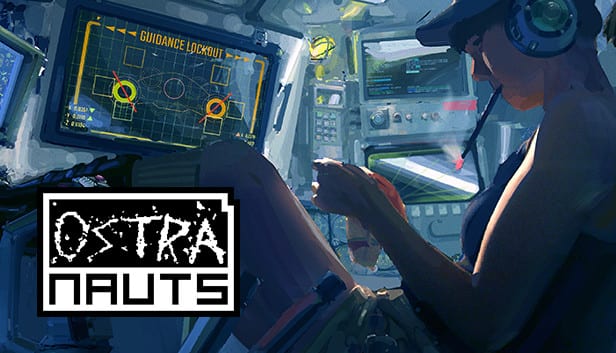
Ostranauts 1.0 landed on Steam 2026-08-03, nine years after Early Access began in 2020. Blue Bottle Games — creators of NEO Scavenger — finally shipped a single-player noir space sim where debt, Newtonian flight, modular life support, and NPC crew psychology share top billing with ship combat near Ceres. There is no multiplayer mode; every permit fine, hypoxia alarm, and mortgage tick is yours alone. This review covers who the game serves, how steep the climb feels, how deep systems run, and what PC you need — with links to guides if you decide to captain anyway.
Launch context: from K-Leg tutorial to system-wide campaign
Early Access Ostranauts was often described as ” brilliant skeleton ” — OKLG salvage loop polished while outer stations stayed gray placeholders. Milestones like Fire in the Hold expanded Venus to OKLG-scale content, added ship combat, torch-travel QoL, and faction reputation gates. Version 1.0 promises conclusion to the Ceres Affair plot (proxy war causes, VHS threads, Ben Choong fallout) plus filled station maps on Mars Tharsis, Deimos Voltaire, Luna Jade Rabbit, and other formerly stub destinations.
If you last played in 2022, expect a different game — not a new genre, but a completed solar system rather than a boneyard demo. Returning captains should skim Updates for patch notes; newcomers should start with Getting Started regardless of this review’s tone.
Who Ostranauts is for
You will love it if you want Dwarf Fortress tension in a spaceship: physical atmospheres, tangible debt, crew schedules, and flight modeled as physics homework you gradually learn to enjoy. Fans of NEO Scavenger, Orbiter curiosity, or Hardspace: Shipbreaker salvage fantasy — but with RPG social moves and station economies — will feel at home.
You will bounce off if you need action-first pacing, forgiving arcade flight, or multiplayer crews. Ostranauts rewards patience — reading in-world manuals, linking CO2 alarms, renewing $5,000/day permits, and accepting that your first undock will embarrass you. Story lovers gain noir faction writing; pure combat pilots must travel to Ceres before guns matter.
Accessibility note: Official interface language is English only on Steam. UI density is high; keep keybinds and nav console references open.
Difficulty and learning curve
Difficulty arrives in layers rather than one slider:
Flight — Newtonian VREL management, alignment rings, COMMS clearance, and clamp engagement gate salvage. How to Fly and Dock is mandatory reading; deaths here are skill checks, not RNG.
Life support — O2 partial pressure near 20 kPa, CO2 scrubber upkeep, airlock discipline. Atmosphere kills quietly; see Manage Atmosphere and Life Support Parts.
Economy — Shift mortgages, permit expiry, repair-to-sell, kiosk spread. Broke captains spiral via fines faster than combat; Salvage Economy explains the loop.
Crew — Cheap wages, expensive death pay, Autonomy loss from micromanagement. Hire Crew and Crew AI prevent ” my mechanic suffocated in the locker ” stories.
Combat (optional mid-game) — Point defense, missiles, and armor near Ceres assume you already fly, breathe, and pay bills. Treat combat as a specialization, not the tutorial.
Character creation careers and starter hull mortgages change early pain — compare starter careers and ship mortgage guides before blaming the sim.
Systems depth: modular, textual, mod-friendly
Ostranauts depth lives in interconnected parts — pumps, canisters, transponders, duty priorities — not abstract skill trees. Ships are literally built from salvaged components with install queues crew can execute. Station economies differ by region: OKLG permit law ≠ Venus acid prep ≠ Ceres faction markets.
Blue Bottle exposes most data as plain-text modding targets; Discord community and long Early Access mod culture remain part of the value proposition for tinkerers.
Narrative systems (social moves, moodlets, background enemies from creation) reward role-play captains who read dialogue and maintain relationships — not min-maxers rushing torch drives alone, though fusion torch builds remain valid endgame goals.
Presentation and tone
Visually, Ostranauts prioritizes clarity over blockbuster spectacle — readable ship cross-sections, dense UI, noir writing in PDA logs and bar chatter. Audio and music support lonely industrial mood rather than heroic orchestral swells. Mature content includes drug references, violence, and text-based intimacy — consistent with NEO Scavenger’s grounded griminess.
System requirements (Steam minimum)
Blue Bottle lists modest PC specs for 1.0:
| Component | Minimum |
|---|---|
| OS | Windows 10 version 21H1 (or newer), 64-bit |
| CPU | Dual Core 2 GHz |
| RAM | 8 GB |
| GPU | Intel HD 4600 (or AMD/NVIDIA equivalent) |
| Storage | 2 GB available space |
Recommended specs on Steam emphasize 64-bit OS but leave CPU/GPU open — sensible given UI-heavy simulation load. SSD helps load times; integrated graphics run the sim but not your dignity during first dock.
No macOS/Linux release is listed on the Steam page at launch; plan accordingly.
Verdict after 1.0
Ostranauts 1.0 is the game Early Access promised — not a streamlined mainstream sim, but a completed hardcore campaign for captains who want every breath counted in kilopascals. OKLG still teaches fundamentals; Venus and Ceres finally give reasons to master torch range, contaminant scrubbers, and optional combat. Single-player purists get uninterrupted narrative; multiplayer seekers should look elsewhere.
Scorecard shorthand: Depth and uniqueness high; accessibility and pacing niche; combat and story payoffs improved substantially versus mid-Early Access builds.
Start here if you buy it
- Character Creation — careers, debt, traits
- Getting Started — first OKLG hour
- How to Fly and Dock — flight skill gate
- How to Salvage — paying the mortgage
- Guides hub — full recommended order
For mechanics reference without walkthrough tone, browse Systems and the Map hub.
Frequently Asked Questions
Quick answers for spacers who want to stay alive.
Is Ostranauts worth buying at 1.0?
If you want a deep single-player salvage sim with Newtonian flight and modular life support, yes — 1.0 completes the solar system and Ceres story arc. If you need fast action or multiplayer, skip it.
What are the PC requirements for Ostranauts?
Steam minimum: Windows 10 21H1+, dual-core 2 GHz CPU, 8 GB RAM, Intel HD 4600-class GPU, 2 GB storage. English interface only at launch.
How hard is Ostranauts compared to other space sims?
Harder than arcade traders, closer to survival sim discipline. Flight, atmosphere, permits, and crew schedules stack — use the Guides hub rather than guessing through deaths.