Ostranauts Mortgage Shift Planner
Know whether the next six-hour tick leaves you solvent before you undock
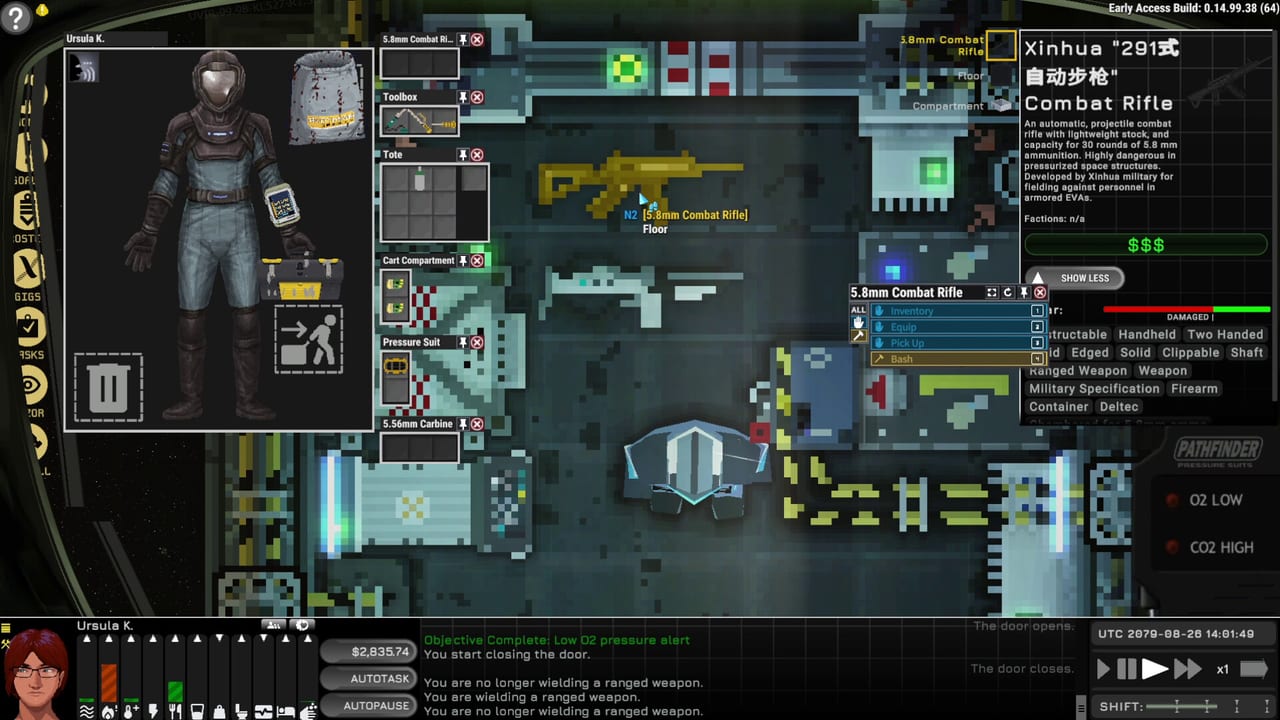
In Ostranauts, time is a bill collector. Own a financed hull and the lender deducts mortgage payments on a six-hour shift cycle whether you are flying, sleeping in a bunk, or arguing with a bartender at OKLG. Idle drama still advances the clock. This planner helps you map one or two shifts ahead so salvage income, permit fees, and emergency refuel stops do not surprise you after undock.
For package comparisons and long-term debt strategy, read the ship mortgage guide. For what derelict parts actually sell for after condition penalties, keep the salvage economy overview open while you fill the table below.
How the shift clock works
Think in shifts, not real-time minutes. Each shift lasts roughly six in-game hours and triggers recurring costs tied to ownership:
- Mortgage payment — automatic deduction while you finance the hull
- Crew wages — if you hired hands with ongoing contracts
- Passive drain — small recurring station fees or insurance-like costs depending on your save state
Income arrives in lumps: salvage sales, bounty payouts, passenger fees, or odd jobs on station. The planner’s job is to ensure lump income arrives before the next deduction when your wallet is thin.
Captains who started debt-free via coffin or poker paths still pay shift-adjacent costs (permits, food, fuel), but skip the mortgage line — delete that row when it does not apply.
Typical cost pressures each shift
These numbers vary by ship package, crew roster, and station, but OKLG-era captains repeatedly hit the same categories:
| Pressure | Why it bites | Planning note |
|---|---|---|
| Mortgage deduction | Fixed shift tick on financed ships | Non-negotiable; build buffer first |
| Daily salvage permit | Roughly $5000/day for legal boneyard access | Buy only on days you will EVA |
| RCS and main fuel | Every undock and correction burn | Empty tanks strand you — see Rescue When Stranded |
| O2 / N2 restock | Life support consumables after long trips | Cheaper than hypoxia |
| Food and morale | Crew needs if you are not solo micromanaging | Skip early, pay later in mistakes |
| Repair parts | Condition loss from uninstall or combat | Sell price collapses on “Damaged” gear |
| Death pay exposure | Upfront crew compensation if someone dies | Read Hire Crew before scaling roster |
Combat-era captains add ammunition, armor repair, and medical rows after Fire in the Hold. Ceres runs are not free just because payout potential rises.
Shift planning worksheet
Copy this table into a notebook or spreadsheet. Fill Starting credits at the beginning of a play session, then update after each major transaction.
| Line item | Shift 1 estimate | Shift 2 estimate | Notes |
|---|---|---|---|
| Wallet at shift start | From finance UI | ||
| Expected income | Salvage sale, job, bounty | ||
| Mortgage / debt tick | − | − | Financed hull only |
| Crew wages | − | − | Per active contract |
| Permits & fees | − | − | Salvage day = ~$5000 |
| Fuel & consumables | − | − | Include return trip |
| Repair before sale | − | − | Vendor penalty if skipped |
| Projected end balance | Must stay above broke | ||
| Buffer target (optional) | 500–2000+ | OKLG taxi / PASS fund |
Rule of thumb: If projected end balance is negative, do not undock for a long haul unless you have a rescue plan. Short boneyard hops with parts already staged beat ambitious routes that miss the tick.
Pre-undock checklist (credit focus)
Run this list before you request COMMS undock clearance:
- Checked finance UI for next shift time and mortgage amount
- Confirmed permit is active if today’s plan includes EVA salvage
- Priced fuel for round trip plus RCS margin
- Listed intended haul with rough vendor values from salvage economy
- Subtracted expected repair costs — damaged goods sell cheap
- Set aside buffer credits for PASS/taxi if docking might fail
- If crew aboard: wages + death pay risk acknowledged
- If combat route: ammo and hull repair row added
Scenario examples
Early OKLG salvage day. You wake with ₡8000, mortgage tick −₡3500 this shift, permit −₡5000. You need at least one uninstall haul worth ~₡9000+ after repairs or you land negative. Plan two small wrecks you can reach and return from within one shift, not one distant derelict.
Mid-game refit week. You are docked installing rooms — no income lump coming. Either pause refit until savings cover two mortgage ticks, or take a quick station job if available. The shift clock does not pause for construction.
Post-Ceres bounty run. Higher payout potential, higher fuel and ammo spend. Add a second shift column specifically for repair on arrival before you sell captured gear.
Links and next steps
Mortgage math is only half the loop. Pair this planner with:
- How to Salvage for permit workflow and uninstall order
- salvage run checklist for EVA packing
- Getting Started if shift deductions are new to you
When Blue Bottle patches economy values, rerun a blank worksheet — old credit muscle memory is how captains go broke on launch week.
Frequently Asked Questions
Quick answers for spacers who want to stay alive.
How often does the mortgage deduct in Ostranauts?
Financed ships typically pay mortgage costs every six-hour shift while you own the hull. The deduction fires on the shift clock, not only when you are flying.
How much should I keep as a credit buffer?
Many OKLG captains aim for at least one mortgage payment plus emergency taxi or PASS fees — often ₡500–2000 or more depending on package and crew. Adjust after your first broke scare.
Does this planner include salvage permit costs?
Yes. Budget roughly $5000 per in-game day for legal boneyard permits when planning salvage income days, as noted on the salvage economy page.