Life Support Parts in Ostranauts
Pumps, canisters, scrubbers, batteries, sensors, and airlocks that keep pressure and CO2 under control
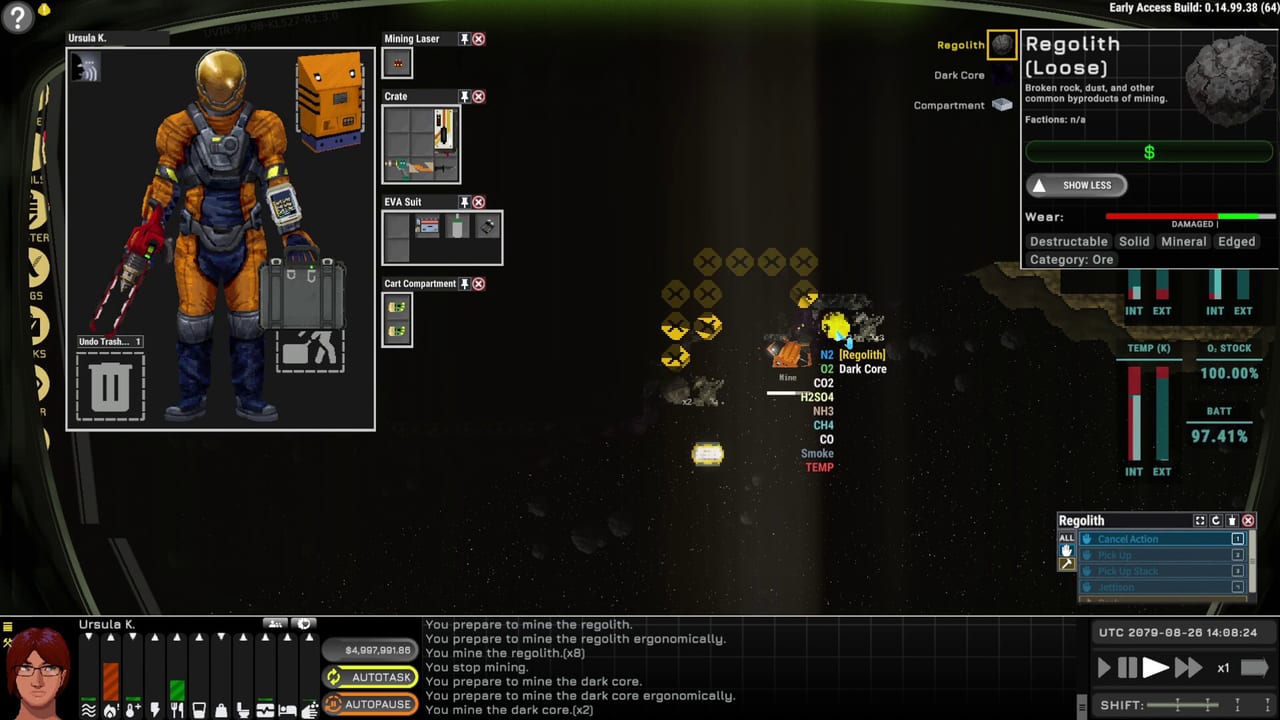
In Ostranauts, life support is a chain of physical parts — not a single green bar. Every breathable hour aboard your hull depends on airtight tiles, powered machines, labeled canisters, and alarms that tell pumps when to stop. Captains who treat atmosphere as “set and forget” usually discover hypoxia during a long boneyard EVA or CO2 headaches after they seal a new room without a scrubber path.
This reference lists the core components you will install, salvage, repair, and replace across a campaign. For hands-on tuning workflows, use Manage Atmosphere and the atmosphere checklist tool.
Healthy atmosphere targets
Human crews expect roughly 20 kPa partial pressure of O2 in a mixed cabin atmosphere, with total pressure commonly near 100 kPa once nitrogen balance is included. Drop below safe O2 thresholds and hypoxia conditions stack; let CO2 climb unchecked and fatigue turns into incapacitation even if oxygen nominally remains.
Temperature also matters: safe cabin bands sit around 290–300 K. Heaters and coolers link to thermostats; heating gas increases volume and can over-pressurize fragile compartments if vents are sealed.
Air pumps and gas canisters
The Kang UT Series air pump is the workhorse mover. Installed on a hull tile with a canister slot, it transfers gas between a room and a vessel — or between two rooms when vents connect compartments. Modes matter:
- Normal flow fills a room from an attached O2 or N2 canister.
- Slow reduces flow rate — useful when filling EVA bottles without slamming pressure.
- Reverse pulls room gas back into a canister — critical for manual depressurization and airlock cycling.
Pumps cannot selectively filter mixed room air into a typed canister: you cannot pump CO2 out of a cabin simply by attaching a CO2 bottle. That limitation pushes captains toward scrubbers or deliberate venting.
O2 canisters supply breathable oxygen for pumps and refueling docks. N2 canisters balance total pressure and feed RCS intake regulators as remass. CO2 canisters and generic gas canisters store waste or mixed gases — scrubber outflow and temporary dumps often land here. Canister labels matter at refuel points: docks fill installed vessels according to equipment type, not whatever slot is empty.
The upgraded Turbo Air Pump adds a higher-throughput mode for large hulls at the cost of sharper power spikes.
CO2 scrubbers and contaminant scrubbers
The CO2 AtmoScrubber (Kang CDR Series) removes carbon dioxide through a consumable scrubber cartridge reaction, exhausting CO2 into an outflow canister on the scrubber’s output tile. Cartridges deplete quickly on crewed ships — community estimates often cite nearly daily replacement per active crew member on long hauls. Link scrubbers to CO2 pressure alarms so they run in Auto rather than constantly at full draw.
Contaminant AtmoScrubbers matter once you leave OKLG’s friendly vacuum. Venusian operations and industrial zones introduce hazardous gases; contaminant alarms and dedicated scrubbers strip acids and toxins into waste canisters. Pair with coolers when reactors or hot cargo push temperatures upward.
Small ships that vent entire compartments through airlocks after each EVA can skip scrubbers temporarily — at the cost of wasted gas and slower turnaround.
Wall vents, auto vents, and compartment zoning
Air vents allow passive equalization between pressurized rooms. Auto air vents seal when they detect unsafe O2 differentials across a boundary — valuable for keeping a breached cargo bay from draining the bridge, but frustrating if you forget they latched closed.
When you add rooms during Ship Building, plan vent paths before you split a single pump loop into dead-end corridors.
Pressure alarms and sensors
O2, N2, and CO2 pressure alarms are the brains that make Auto mode work. Link a pump to its matching O2 or N2 alarm and the machine fills until the alarm clears. Link scrubbers to CO2 alarms the same way.
Alarms do not relieve over-pressure automatically. If a room exceeds safe totals, you must manually run a pump in reverse or vent deliberately — a common post-refit mistake when a new canister keeps filling after doors seal.
Batteries and power budgeting
Life support machines draw continuous kWh load. Ship batteries store operational power; reactors extend endurance for torch-drive hulls. Nav consoles, transponders, antennas, pumps, scrubbers, heaters, and lights compete on the same grid — see Ship Building for conduit routing.
Undocking with charged RCS but flat batteries produces the classic “COMMS dead, pumps offline” failure chain. Keep a spare charged battery in cargo for PASS taxi emergencies described in Rescue When Stranded.
Airlocks and EVA transitions
Airlocks are not cosmetic doors — they are miniature life support puzzles. Cycling typically involves isolating the lock, pumping or venting to match the far side, then opening the outer door without blasting the ship’s atmosphere into vacuum.
Captains without proper lock plumbing sometimes vent entire rooms — fast but expensive in O2 and heat. Suit up with functional EVA gear before you test a new lock under time pressure; crew AI will not forgive a forgotten inner door.
Salvage and repair notes
Life support gear is high-value salvage: motherboards and heat sinks appear constantly in repair recipes for pumps and scrubbers. Damaged variants sell poorly at licensed kiosks — budget time to repair-to-sell before you haul a dented scrubber home.
Derelicts often yield partially filled O2 bottles and empty CO2 waste tanks; charged batteries are rarer and worth prioritizing in How to Salvage routing.
Related pages
- Systems hub — overview of economy and crew layers
- Salvage Economy — selling intact life support modules
- Crew AI — keeping hired hands alive in suits
- OKLG & Boneyard — where most early parts are found
Frequently Asked Questions
Quick answers for spacers who want to stay alive.
Why will my pump not remove CO2 from a room?
Pumps move bulk gas between rooms and canisters but do not filter mixed atmosphere by type. Use a CO2 AtmoScrubber linked to a CO2 alarm, or vent the compartment through an airlock cycle.
How much O2 pressure do humans need in Ostranauts?
Target roughly 20 kPa O2 partial pressure in a healthy mixed atmosphere, with total pressure near 100 kPa. O2 alarms and pumps in Auto mode maintain that band when hull tiles are airtight.
Do I need scrubbers on short OKLG salvage runs?
Solo captains on same-day boneyard hops can sometimes vent after EVA instead of running scrubbers. Multi-day trips, extra crew, or sealed expansions make cartridges worth the power and upkeep.