Money Making in Ostranauts
From broke Port Azikiwe couriers to Ceres bounty spikes — income by game phase
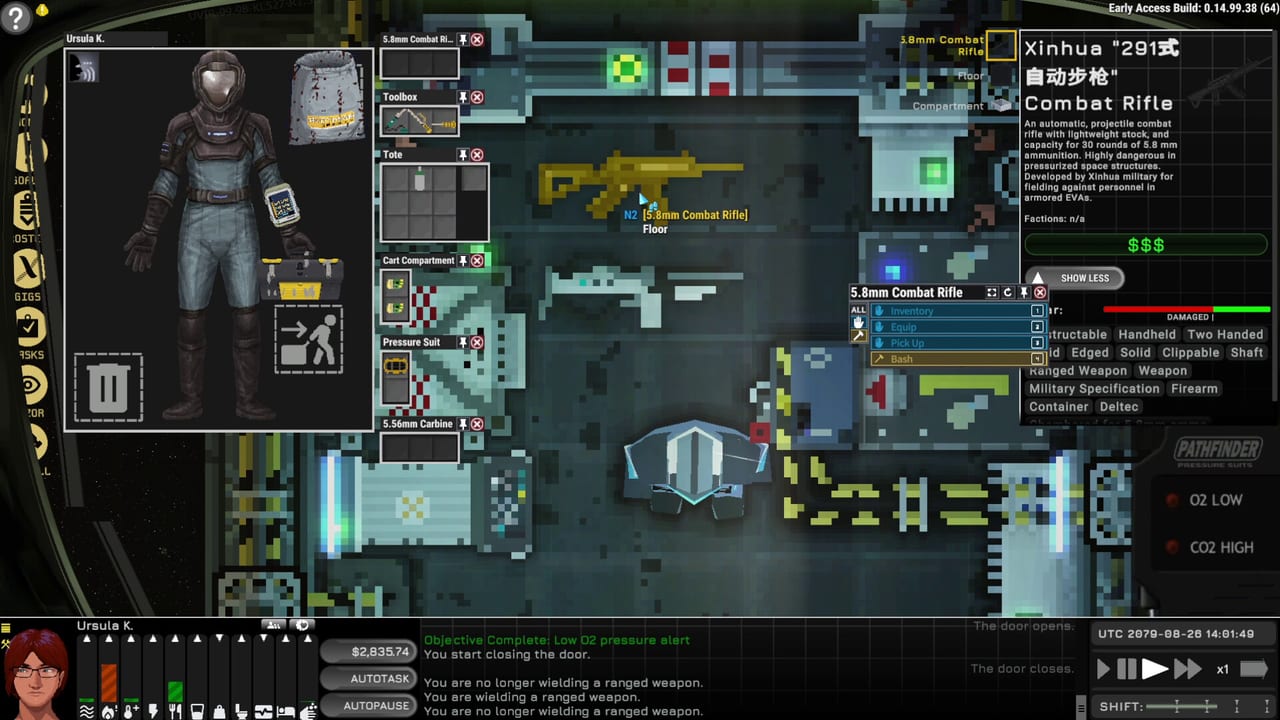
Ostranauts bankrupts captains who treat income as an afterthought. The six-hour shift mortgage ticks whether you are role-playing at the bar or halfway through a botched EVA. Version 1.0 and post-launch rebalance patches added bounty hunting, retuned PASS ferry timing, and fixed multi-gig payouts — but the fundamental ladder remains: station gigs first, OKLG salvage second, specialized mid-game loops third.
This guide maps every major income source by game phase, compares risk and capital requirements, and links deep dives so you do not reread entire walkthroughs. Pair it with the mortgage shift planner and salvage economy overview.
Phase 1: Broke on OKLG (no ship or dead reactor)
When police impound your hull or batteries flatline, you still need cash for fines, ferry rides, and permit renewals.
Gig Nexus couriers — Green kiosks on Port Azikiwe pay for intra-station deliveries you can finish on foot. No salvage permit, no fuel burn. Stack two gigs only when both timers allow completion. Full workflow: Gigs and Gig Nexus.
Short-hop gigs at Ceres or Europa ports — Emergency income when a torch misburn strands you abroad. Payouts are smaller than home salvage but beat sleeping through shift end broke.
PASS ferry — Costs money and shift time after v0.15.1.20; use it to reach a dead ship, not to cheese gig timers. See PASS Ferry.
Avoid debug money unless testing — Rescue When Stranded covers legitimate NAV recovery.
Phase 2: Salvage baseline (mortgage engine)
Once you undock reliably, licensed salvage pays the long bills:
- Buy the daily Ayotimiwa permit (~$5000/day at OKLG norms).
- Survey boneyard derelicts — uninstall high-value parts before hauling the hull.
- Repair-to-sell or scrap at vendor kiosks; mood and condition affect spread.
- Return before shift end; pay mortgage via Funds.
Walkthrough: How to Salvage. Checklist: salvage run checklist. Economy context: salvage economy.
Salvage is steady — lower peaks than bounties, fewer repair surprises than combat. Most captains should treat it as the primary income through first fusion refit planning.
Phase 3: Docking fees and footprint discipline
Every hour clamped at OKLG charges facilities plus length-over-all dockage. Expanding your hull without earning more per shift is a silent tax hike.
Read Docking Fees before you square the cargo bay outward. Undock cleanly — v0.15.1.16+ clears recurring ghost fees, but legitimate berth costs remain.
Phase 4: Ship flipping and bulk cargo
Mid-game captains with torch range and haul capacity diversify:
Ship flipping — Buy distressed hulls, repair critical systems, sell at markup. Capital-intensive; failure modes include bad atmosphere routing and hidden structural damage. Guide: Ship Flipping.
Bulk trading — Cargo pods and zone pricing move mass goods cheaper than kiosk one-offs. Requires planning barter zones and haul destinations. Guide: Bulk Trading.
Both loops assume How to Fly and Dock competence and Zones and Hauling for crew cargo handling.
Phase 5: Combat income (Ceres and beyond)
Fire in the Hold and 1.0 unlocked high-variance earners:
Bounty hunting — Dead-or-alive warrants on corporate boards. Spikes higher than salvage when intercepts succeed; repair and ammo costs eat margins on bad weeks. Not day-one content — guide: Bounty Hunting.
Asteroid mining — Ore sales at Port Mojave or Zhonghuamen when prices beat warrant payouts. Overlaps combat gear — treat explosives like ammunition. Guide: Asteroid Mining.
Faction standing — BCER versus BCRS gates ammo and repair vendors. Map: Ceres Conflict Zone. Combat primer: Ship Combat.
Income comparison table
| Loop | Capital needed | Risk | Steady? | Best phase |
|---|---|---|---|---|
| Station gigs | None | Very low | Medium | Hour zero |
| OKLG salvage | Permit + tools | Medium | High | Early–mid |
| Ship flipping | Large lump sum | High | Low | Mid |
| Bulk trade | Pods + fuel | Medium | Medium | Mid |
| Bounties | Combat hull | High | Low | Mid–late |
| Mining | EVA + charges | Medium | Medium | Mid |
Shift planning habit
Print one row per six-hour shift on the mortgage shift planner:
- Expected gig + salvage gross
- Fixed: mortgage, dockage, crew wages, death pay escrow
- Buffer: one permit day + one PASS recovery
If buffer goes negative, cancel Ceres plans and run OKLG salvage until Funds recover. Hire Crew only when wages fit inside the buffer — death pay bankrupts faster than combat.
Post-rebalance habits (2026 patches)
After PASS and Gigs Rebalance (v0.15.1.20):
- Ferries advance the clock — factor shift time into gig math.
- Interplanetary couriers require item delivery before pay.
- PASS is recovery logistics, not a free taxi for Nexus timers.
Patch notes: PASS and Gigs Rebalance.
Modding and vanilla assumptions
Steam Workshop economy mods may change permit costs, warrant payouts, or shift timers. This guide assumes vanilla 1.0 AppID 1022980. Modded careers need self-verification — start at Steam Workshop and JSON Data Modding.
Related pages
- Getting Started — first docked hour
- Builds hub — starter careers and mortgage packages
- Guides hub — full recommended reading order
- Tools hub — planners and checklists
- Review — whether the grind suits your taste
- Updates hub — economy hotfixes
Frequently Asked Questions
Quick answers for spacers who want to stay alive.
What is the fastest early money in Ostranauts 1.0?
Station **Gig Nexus** couriers on OKLG — no ship required. After your first undock, daily **salvage permits** and boneyard uninstall loops beat gigs for total shift income.
When should I switch from salvage to bounties?
After OKLG solvency, reliable life support, and a tested combat loadout. Bounties spike higher but variance and repair costs exceed steady salvage — see Bounty Hunting.
Do PASS ferries still help make money?
Yes for **recovery** — reaching a dead ship or port — but ferries now advance shift time. They are poor gig-timer exploits post-rebalance. See PASS Ferry.