Fire and Smoke in Ostranauts
Hull fires from combat and mining, smoke spread, extinguish orders, and faction standing
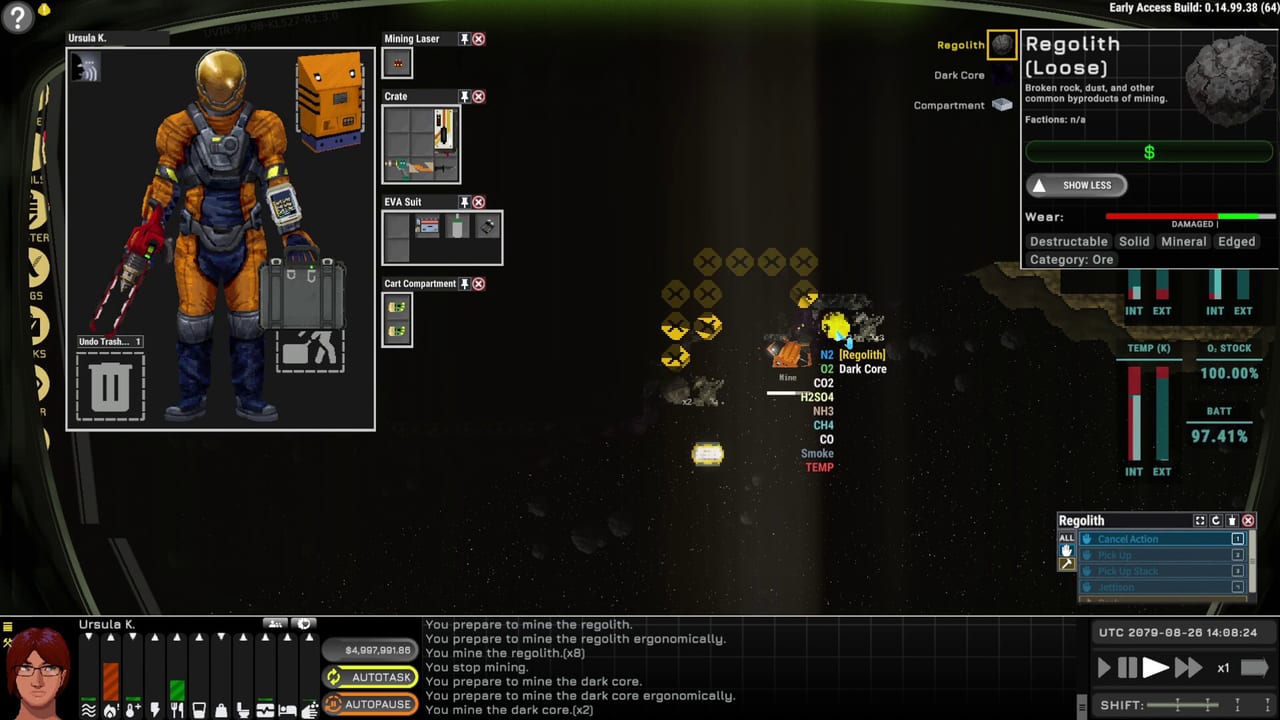
Fire and smoke entered Ostranauts with Fire in the Hold as a systemic threat — not a scripted set piece, but a spreading simulation that couples hull damage, atmosphere chemistry, crew panic, and faction politics. Blue Bottle Games ties fires to ship combat hits, asteroid mining accidents, and reactor mishaps. A post-launch patch note emphasized that extinguishing fires restores faction standing when collateral damage angered station security — captains who walk away from smoldering wrecks pay social costs, not just repair bills.
This systems page explains ignition sources, smoke behavior, extinguish workflows, atmosphere interaction, and how fire preparedness fits refits from Ship Building.
Fire in the Hold: why fires matter
Before Fire in the Hold, hull breaches killed through vacuum alone. Combat added kinetic heating, ammunition cooks-off, and ablative plasma — failures that vent compartments and ignite consumables. Mining added shaped charges and volatile dust. Life support still targets ~20 kPa O2 near 100 kPa total pressure — fire consumes oxygen faster than scrubbers react if pumps lose power mid-alarm.
Fires punish captains who treat combat as exterior-only gameplay. Interior tiles adjacent to Whipple cladding breaches flashover when PDC ammo or missile fragments penetrate — see Ship Combat for armor placement.
Ignition sources
Common fire starters in 1.0 builds:
Combat damage
- Kinetic impacts through weakened ablative panels
- Ammunition magazine hits — 20mm PDC belts, rail slugs, missile fragments
- Reactor or capacitor overloads when weapon banks spike load during burns
Mining and industrial accidents
- Shaped charges misplanted inside pressurized volumes
- Volatile hydrate pockets venting into hot engine rooms
- Grinding sparks near O2 leaks during EVA cargo transfer
Life support failures
- Electrical shorts on damaged conduits — pair with Life Support Parts
- Heater runaway in cold compartments when thermostats fail
Each source demands different prevention — combat refits need cladding and fire lockers; mining ships need blast isolation zones via forbid rules from crew AI.
Smoke spread and atmosphere
Smoke moves through connected airtight volumes according to pressure gradients, open doors, and vent routing. Symptoms captains notice:
- Rising CO2 and contaminant alarms before visible flame
- Crew moodlets and Autonomy crashes when smoke interrupts sleep shifts
- Nav console visibility loss when bridge compartments fill — COMMS undock fails at the worst moment
Smoke is not cosmetic — it marks tiles unsafe for crew without suits. Manage Atmosphere principles apply double during fire: isolate compartments, close doors, route scrubbers, and verify pump power on a dedicated trunk.
Use the atmosphere checklist tool after any refit that moved doors or vents — fire spreads through routing mistakes you made while expanding cargo.
Extinguishing fires and faction standing
Extinguish orders — handheld units, built-in suppressors, or vent-to-vacuum on appropriate tiles — stop flame spread and begin damage assessment. Patch notes after Fire in the Hold clarified that completing extinguish workflows on faction-sensitive damage restores standing when security would otherwise fine you for collateral.
Workflow:
- Pause — Space bar before you mis-click thrusters or open wrong doors
- Isolate — Close airtight doors between fire zone and bunks
- Cut power — De-energize affected conduits if electrical ignition continues
- Extinguish — Crew or captain on tile with suppressor gear
- Vent or scrub — Remove smoke before pressurizing for crew return
- Repair — Restore cladding and conduits before next undock
Skipping step six invites reignition when the next combat hit lands on charred structure.
Integration with combat and mining loops
Ship combat sorties should end with damage surveys — not just ammo counts. PDC belts near fuel lines are layout errors; fix them in dock before Ceres conflict zone redeploy.
Asteroid mining ships should store explosives away from O2 manifolds and run fire drills after first shaped charge — see Asteroid Mining.
Salvage hauls contaminated wrecks with unknown atmospheres — How to Salvage warns about venting derelicts; imported smoke kills crew after a “successful” haul.
Ship design for fire resilience
Refit guidelines from experienced captains:
- Fire lockers near engineering and ammo storage
- Redundant pump trunk so one breach does not dark all scrubbers
- Airlock isolation between cargo (contaminated ore) and crew quarters
- Ablative cladding maintained — stripped panels invite flashover
Ship Building covers install sequencing — pressurize new volumes only after fire suppression routing exists.
Crew safety and death pay
Fires kill faster than combat when crew sleep through alarms. Assign Work shifts during refit hot work; use forbid zones during mining charges. Fatalities trigger death pay — Hire Crew escrow math turns one sloppy extinguish into bankruptcy.
Suit integrity matters during smoke EVA — vision obscured, pathing fails, Autonomy drops.
Related pages
- Manage Atmosphere — O2, CO2, vent routing
- Life Support Parts — pumps, scrubbers, alarms
- Ship Combat — kinetic ignition sources
- Ship Building — fire locker placement
- Asteroid Mining — explosive accidents
- Fire in the Hold update — milestone that shipped the system
- Systems hub — economy and crew layers
Frequently Asked Questions
Quick answers for spacers who want to stay alive.
Does extinguishing fires affect faction standing?
Yes — post–Fire in the Hold patch notes state that completing extinguish workflows on collateral damage can **restore faction standing** with affected stations. Do not abandon smoldering wrecks near Ceres ports.
What causes hull fires besides combat?
Mining explosives, electrical shorts, reactor overloads, and contaminated salvage atmospheres all ignite compartments. Shape-charge accidents are common on asteroid mining ships without blast isolation.
How do smoke and atmosphere interact?
Smoke spreads through connected pressurized volumes, raises contaminant alarms, and can make bridge tiles unusable. Isolate doors, scrub, and verify pump power — see Manage Atmosphere.