Ostranauts Systems
Life support, salvage economics, and crew automation that decide whether your hull pays the mortgage
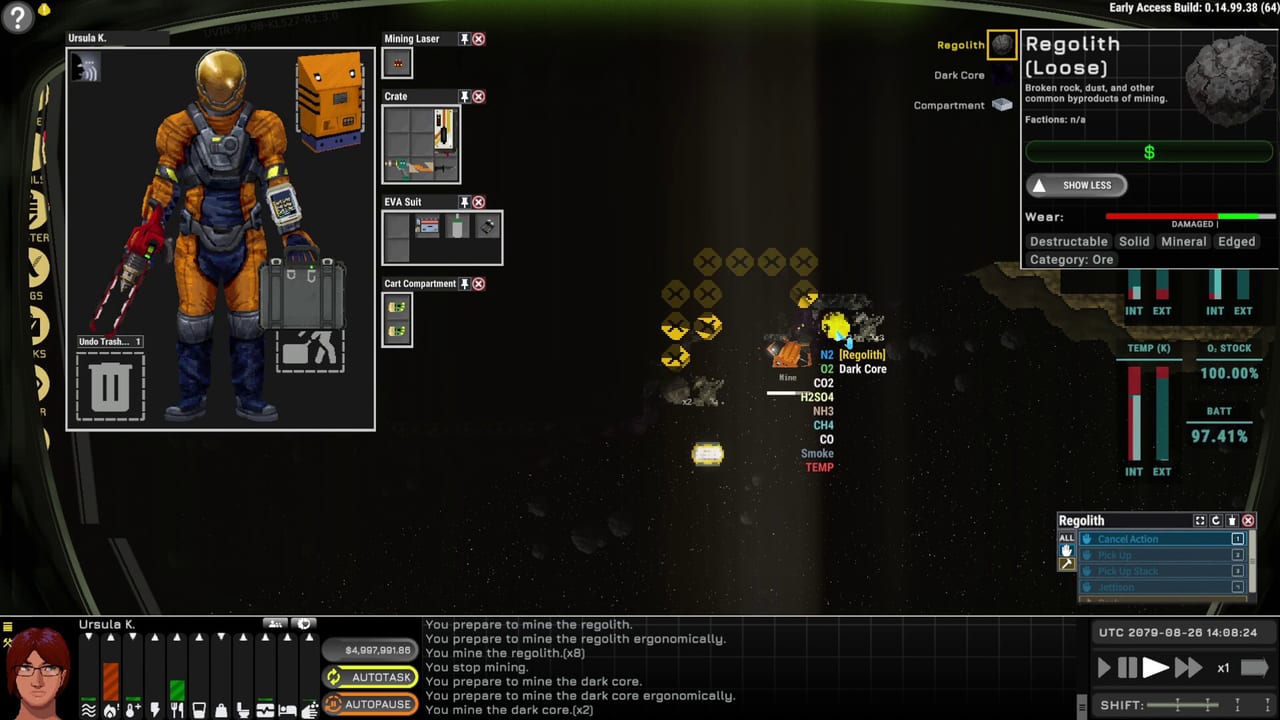
Ostranauts is not a game where you press one “life support” button and forget the rest. Blue Bottle Games built a modular ship sim where pumps, permits, shift clocks, and NPC priorities interact — often brutally — with Newtonian flight and station politics. This hub groups the mechanical layers that kill new captains quietly (bad atmosphere) or loudly (security fines and repossession).
Use these pages when a guide tells you what to do but you still need to understand why a scrubber cartridge vanished overnight or why your crew stopped hauling salvage mid-shift.
Life support and hull integrity
Breathable air is the hidden timer on every expedition. A healthy compartment targets roughly 20 kPa O2, balanced nitrogen for total pressure near 100 kPa, and CO2 scrubbing before headaches turn into hypoxia. Starter hulls may look fine until you add a room, reroute a conduit, or leave a pump on manual while an alarm screams.
The life support parts reference documents the Kang UT air pumps, O2/N2/CO2 canisters, CO2 AtmoScrubbers, wall vents, pressure alarms, batteries, and airlocks that turn an airtight box into a survivable home. Pair it with Manage Atmosphere for step-by-step tuning and the atmosphere checklist tool before you expand past your first two rooms.
Power draw matters as much as gas math. Pumps, scrubbers, heaters, and nav avionics all compete for the same battery stack. A captain who undocks with full RCS tanks but dying cells will learn why PASS taxi fees exist.
Salvage economy and the debt loop
OKLG rewards shipbreakers who understand permits, kiosk barter, and condition pricing — not just who swings a wrench fastest. Legal boneyard work expects a Salvage Permit tied to your transponder; without one, Nnamdi Azikiwe Security Services can fine you for docking derelicts. Permits also unlock the Licensed Supply Kiosk barter screen where intact components sell for real money.
Read the salvage economy overview for permit tiers, repair-to-sell workflows, scrap-kiosk penalties, and how the six-hour shift mortgage turns salvage into solvency or a debt spiral. The guide layer lives in How to Salvage and the salvage tools checklist.
Rumors of informal buyers circulate on station — treat them as high-risk shortcuts, not a tutorial replacement. The licensed loop exists because fines, lost permits, and damaged resale value hurt more than a bad haggle.
Crew AI, roster shifts, and forbid zones
Once your hull outgrows solo EVA, hired hands become labor — cheap day rates with expensive death pay held in escrow. Crew NPCs run needs-driven AI: food, water, oxygen, sleep, hygiene, and deeper moodlets shape whether they obey orders or sulk through a free shift.
The crew AI reference explains Work, Free, and Sleep shifts in the Roster app, Autotask behavior, duty priorities from Repair down to Clean, and forbid zones that act like invisible walls during construction. Before you hire, read Hire Crew for negotiation and suit assignments.
Micromanagement has a cost. Sustained direct control drains crew Autonomy and can make NPCs ignore queued work even during orange Work shifts. Captains who queue Install and Restore orders, then walk away, finish refits faster than captains who puppet every tile.
Fire, smoke, and hull emergencies
Fire in the Hold added spreading fire and smoke tied to combat hits, mining accidents, and electrical faults. Fires consume O2, obscure bridge tiles, and trigger crew panic — worse than a quiet CO2 climb because repair and extinguish orders compete with undock clocks. The Fire and Smoke reference covers ignition sources, smoke routing through connected compartments, extinguish workflows, and patch notes that restoring faction standing after collateral damage requires finishing suppression — not walking away from smoldering wrecks near Ceres ports.
Pair fire prep with Manage Atmosphere zoning — isolate cargo bays that hold mining explosives or ammo magazines from crew bunks. Combat captains should read Ship Combat armor and Ship Building fire locker placement together.
How systems connect to the map
Station layout changes what you can afford to haul. OKLG docking fees, kiosk placement, and boneyard density define your first fifty hours; Venus acid atmospheres and Ceres faction tension define the mid-game. The Map hub covers OKLG and the boneyard plus stations and travel prep for outbound burns.
Flight and console literacy still gate everything — browse Controls for keybinds and nav console notes, and the Guides hub for walkthrough order.
Related pages
- Life Support Parts — pumps, canisters, scrubbers, sensors, airlocks
- Salvage Economy — permits, barter, repair-to-sell, debt pressure
- Fire and Smoke — hull fires, extinguish, faction standing
- Crew AI — roster priorities, autotask, forbid zones, needs
- Builds hub — starter careers, mortgages, torch drive upgrades
- Review — 1.0 launch context and who the campaign suits
Frequently Asked Questions
Quick answers for spacers who want to stay alive.
Which Ostranauts system kills new players most often?
Atmosphere failures — low O2, climbing CO2, or a breached airlock — kill quietly before debt does. Start with Life Support Parts and Manage Atmosphere.
Do I need a salvage permit for every station?
Permit rules focus on OKLG local space and the boneyard. Other regions have their own vendors and hazards; see Salvage Economy and the Map hub before you assume K-Leg rules apply system-wide.